 Ask Chatgpt to summarize The 10-Point Ecommerce Website Checklist for 2026
 Ask Grok to summarize The 10-Point Ecommerce Website Checklist for 2026
 Ask Claude to summarize The 10-Point Ecommerce Website Checklist for 2026
 Ask Perplexity to summarize The 10-Point Ecommerce Website Checklist for 2026
 Ask Gemini to summarize The 10-Point Ecommerce Website Checklist for 2026

You’re probably in one of three situations right now. You’re planning a new store and trying to avoid an expensive rebuild six months after launch. You’re inheriting an ecommerce site that “mostly works” but leaks revenue through slow pages, weak tracking, and checkout friction. Or you’re close to launch, and the team has realized that a homepage, a payment button, and a few product pages don’t add up to a real ecommerce operation.
Table of Contents
That’s the trap. Teams treat an online store like a web design project, when it’s a business system with technical dependencies everywhere. Navigation affects product discovery. Page speed affects paid traffic efficiency. Checkout logic affects conversion. Analytics affects every decision after launch. If one layer is weak, the rest of the stack has to compensate.
A practical ecommerce website checklist starts with the basics. A solid minimum includes a home page, shopping cart, personal account, contacts and store or distribution-point addresses, about page, catalog, payment and delivery information, and warranties or returns pages, according to Creative Tim’s ecommerce checklist reference. The same checklist also points to the catalog features that make stores usable at scale, including filters, sorting, quick view, favorites, and product comparison, plus operational tools like pop-ups, push notifications, internal stats, messenger widgets, affiliate programs, A/B testing, and dynamic content.
That baseline matters, but it’s still not enough. High-performing stores don’t win because they checked a few launch boxes. They win because the store is built as an integrated asset that can sell, measure, adapt, and survive failure.
So this isn’t a generic to-do list. It’s a systems-level ecommerce website checklist built around 10 core pillars. Use it to scope a build, audit an existing store, or pressure-test a launch before traffic starts hitting production.
1. Core Web Vitals Optimization and Page Speed Performance
Slow stores don’t just annoy shoppers. They distort every other investment you make. Paid traffic gets more expensive, search visibility gets harder to earn, and product pages underperform before merchandising even has a chance.

For ecommerce, speed work has to focus on templates, not isolated pages. The homepage matters, but category pages, product pages, cart, and checkout matter more. If the store runs on WooCommerce or another database-heavy stack, the first real bottleneck is usually uncached queries, oversized media, render-blocking scripts, and third-party apps that all want to run on every page.
What to tune first
Start with the heavy pages that generate revenue. Product detail pages often carry image galleries, reviews, related products, recommendation widgets, tracking scripts, and variant logic. That’s where performance budgets get blown.
A practical stack usually includes:
- Responsive image delivery: Serve modern formats where supported, generate multiple sizes, and avoid sending desktop assets to mobile screens.
- Caching at multiple layers: Full-page caching for anonymous traffic, object caching for repeated queries, and CDN edge caching for static assets.
- Script discipline: Delay or remove non-critical JavaScript, especially chat widgets, heatmaps, and marketing tags that fire before the page becomes usable.
- Template simplification: Don’t let every plugin inject blocks into the product page just because it can.
Practical rule: If a feature can’t justify its weight on a product page, it shouldn’t load there.
One of the best habits is testing before launch and after every major merchandising or plugin change. Use Lighthouse for direction, but confirm with real-user conditions and repeatable tests. Teams working on WordPress stores usually benefit from a more disciplined performance review process like this guide on improving WordPress site speed.
Later in the project, verify behavior under stress, not just synthetic scores.
The core trade-off is flexibility versus speed. Rich merchandising, personalization, and third-party widgets can improve selling. They can also turn a fast store into a fragile one. Strong teams decide which scripts earn their place, then keep measuring.
2. Secure Payment Gateway Integration and PCI DSS Compliance
Payment is where engineering mistakes become business problems fast. A payment setup can look fine in staging and still fail under real traffic, edge-case validation, or webhook delays.
The first decision is architectural. Keep your store as far away from raw card handling as possible. Use tokenized gateway flows, hosted fields, or redirect models that reduce your exposure and shrink the compliance burden. Stripe, PayPal, Square, and Authorize.net are common choices because they give merchants flexibility, but the implementation quality matters more than the brand name.
What a safe payment setup actually includes
A reliable payment layer usually has these traits:
- Tokenized transactions: The store should avoid storing raw card data.
- Webhook handling: Payment confirmation, refunds, and asynchronous status changes need dependable event processing.
- Clear failure states: Declines, retries, and duplicate submissions should be handled explicitly.
- Staging isolation: Never test payment logic in a way that pollutes live order data or operational reporting.
The mistake I see most often is teams focusing on the happy path only. Card approved, order created, confirmation email sent. That’s not enough. You need to test what happens if authorization succeeds but order creation fails, if the callback arrives late, or if the customer refreshes the page mid-payment.
Payment reliability is less about the checkout form and more about what happens when systems disagree.
PCI discipline also isn’t just about a badge in the footer. It’s a chain of decisions across hosting, forms, scripts, access control, logging, and vendor selection. If an admin plugin exposes unnecessary account access, or a custom integration logs sensitive payloads, the whole setup gets riskier.
Businesses selling across regions should also think beyond cards. Local wallets and trusted payment methods can reduce friction, but every added option increases testing complexity. That’s the trade-off. More payment choice can improve conversion, but only if reconciliation, refunds, and operational support stay manageable.
3. Mobile-Responsive Design and Mobile-First Development
A shopper finds your product from Instagram on a phone, opens the category page, and hits three friction points in under a minute. The menu takes over the screen. Filters are hard to close. The add-to-cart button sits below a long block of content and a heavy image gallery. That is not a design issue in isolation. It is a conversion problem caused by weak mobile priorities.
Mobile-first development is one of the 10 pillars because it shapes far more than layout. It affects navigation, content hierarchy, media handling, search behavior, and checkout completion. Teams that treat mobile as a late QA pass usually inherit desktop assumptions in every template, then spend the end of the project patching spacing, hiding modules, and cutting content after the fact.

What mobile-first changes in practice
Start with the smallest useful viewport and force the business to make choices early. Which filters deserve first exposure. Which product details reduce hesitation. Whether price, stock status, delivery estimate, and returns policy appear before long-form content. Those decisions improve mobile usability, but they also tighten the entire buying journey.
A mobile-first build usually includes:
- Navigation built for task completion: Category access, search, account, and cart need to stay easy to reach without stuffing the header.
- Touch-safe controls: Swatches, filters, accordions, and quantity selectors need enough space for thumbs, not mouse pointers.
- Content priority by buying intent: Product pages should surface the information that helps someone decide, not just everything marketing wants to publish.
- Media that supports the sale without slowing it down: Galleries, zoom, alternate images, and video should load in a way that preserves responsiveness on weaker connections.
The trade-off is straightforward. Richer mobile experiences can raise engagement, but every extra module competes for attention, bandwidth, and screen space. On some stores, a sticky add-to-cart bar helps. On others, it hides product options or clashes with chat widgets and consent banners. Good mobile-first work means choosing what earns its place.
For WordPress teams, these mobile-responsive WordPress design practices are a useful reference, and a technical website audit for ecommerce usability and template behavior usually exposes the hidden problems earlier than visual review alone.
The failure pattern is predictable. Product teams approve desktop comps first. Content teams add more modules. Engineering adapts the same structure to smaller screens. Then mobile feels crowded because the underlying system was never designed to prioritize. Fixing that late costs more than designing for mobile constraints from the start.
4. Search Engine Optimization Foundation and Technical SEO
A category launch goes live, paid traffic lands, products are strong, and search still underperforms. In ecommerce, that usually traces back to technical SEO, not a copy problem. Search engines need a clear model of the catalog, and this pillar is about building that model so the site can be crawled, indexed, and ranked without confusion.
The core question is simple: what should search engines discover, what should they ignore, and how consistently does the platform enforce those rules across thousands of URLs?
Build an indexable store, not just indexable pages
Ecommerce SEO breaks when teams treat pages one by one. Instead, the unit of work is the system. Category templates, product templates, faceted navigation, pagination, out-of-stock handling, and campaign landing pages all affect crawl efficiency and index quality.
The baseline usually includes:
- Clean, stable URLs: Product and category paths should stay readable and should not change every time merchandising reorganizes a collection.
- Canonical rules that match platform behavior: Variants, sort parameters, filter states, and tracking parameters need explicit canonical logic.
- Sitemap discipline: Include canonical URLs that deserve visibility. Leave out thin, duplicate, or utility pages.
- Structured data: Product, Offer, Review, BreadcrumbList, Organization, and FAQ markup help search engines interpret the catalog correctly, as noted in Plerdy’s ecommerce checklist.
- Internal linking that reflects buying paths: Breadcrumbs, related products, subcategory links, and curated hubs should support both discovery and crawl depth.
- Indexation controls: Internal search results, duplicate collection pages, and low-value filtered URLs often need noindex rules, canonicalization, or both.
This is one of the clearest trade-offs in ecommerce. Merchants want flexible landing pages, filter combinations, seasonal collections, and duplicate category views for campaigns. They often have good reasons. But every new URL pattern increases the chance of duplicate content, diluted internal authority, and wasted crawl budget. The right answer is rarely “index everything.” It is to decide which templates drive organic demand and configure the rest for navigation, paid traffic, or retention.
Audits should start at the template level, not with isolated pages. Review category grids, product detail pages, paginated archives, faceted states, search-result pages, and international or localized versions. A disciplined technical ecommerce website audit usually exposes the recurring failures fast: duplicate metadata, conflicting canonicals, schema errors, orphaned pages, and category structures that make sense internally but not to search engines or buyers.
One warning matters here. Technical SEO can improve visibility, but it cannot rescue weak category strategy or poor product data. If the taxonomy is inconsistent, attributes are incomplete, or important products sit too deep in the structure, search performance stalls because the underlying system is hard to interpret.
Search engines reward clarity. High-performance ecommerce teams treat SEO as an operating model for the catalog, not a plugin setting or a launch checklist item.
5. Product Information Architecture and Content Management
A shopper lands on a category page, clicks three filters, opens two products, and still cannot tell which item fits their need. The problem usually is not design. It is product information architecture.
This pillar covers more than product copy. It defines how the catalog is structured, which attributes are required, how products relate to categories, and what the CMS lets the team change without engineering help. If that system is weak, merchandising slows down, filters become unreliable, internal search loses precision, and campaign pages turn into one-off work.
A practical ecommerce website checklist should treat the catalog as an operating system for revenue. Discovery features such as filtering by price, manufacturer, size, color, and discount, plus sorting by rating, newest arrivals, price, and name, are standard expectations, as outlined in Creative Tim’s checklist. Quick view, favorites, and product comparison also become more useful as SKU counts grow and product selection gets harder.
Build for content operations as much as customer browsing
Good frontend behavior starts with disciplined backend structure. Filters only work when attributes are standardized. Search only works when names, synonyms, and specs are consistent. Collection pages only stay current when merchandisers can update them safely inside the CMS.
Strong product architecture usually includes:
- A category model people can predict: Shoppers should understand where products live without learning your internal org chart.
- Structured attributes with validation: Size, compatibility, material, dimensions, finish, and similar fields should follow one format across the catalog.
- Content controls for non-technical teams: Merchants need to update badges, copy blocks, featured sets, seasonal collections, and landing pages without filing development tickets for every change.
- Product types that match the business: Simple products, variants, bundles, subscriptions, and made-to-order items often need different rules for pricing, stock, content, and display.
There is a real trade-off here. More attributes improve filtering and product comparison, but they also increase content maintenance cost. I usually advise teams to define the minimum attribute set required for search, filters, merchandising, and returns prevention, then enforce it at the data-entry level. Optional fields sound flexible. In practice, they create half-complete catalogs.
The best catalogs support different buying modes without breaking structure. One customer shops by technical constraints such as dimensions, voltage, or compatibility. Another shops by style, color, or brand. A high-performance ecommerce system supports both paths from the same product data model instead of forcing separate page systems or duplicate entries.
Supplier feeds rarely solve this on their own. They provide inventory and raw specs. They do not provide clear naming, consistent imagery rules, normalized attributes, or editorial standards. Without that layer of governance, the search bar becomes the fallback for bad taxonomy, and conversion suffers because customers have to do extra interpretation before they can buy.
6. Secure and Optimized Checkout Flow
A shopper adds products, reaches checkout, and stalls on a shipping surprise, a forced account prompt, or a payment form that hangs for a few seconds. That revenue was close to booked. Checkout decides whether the system collects it.
This pillar is not just about form design. It covers the full transaction path, from cart state and pricing accuracy to payment authorization and order confirmation. Treat checkout as a revenue system with strict failure tolerance, not as the final page in the journey.

Reduce friction where it changes conversion
The highest-impact improvements usually come from removing work for the buyer and reducing the number of ways the flow can fail.
- Keep guest checkout visible: Account creation can follow the purchase.
- Collect only required information: Extra fields slow completion and increase form errors.
- Show pricing clearly and early: Shipping, taxes, discounts, and final totals should not appear as surprises at the last step.
- Use forgiving validation: Catch errors early, but do not block progress over minor formatting issues.
Coupon boxes, upsells, loyalty prompts, and cross-sells need restraint. They can increase average order value, but they also create distraction at the point where intent is highest. I usually advise teams to protect the payment path first, then test any added merchandising against checkout completion rate, not just basket size.
The visible UI is only part of the job. Session expiry, stale cart data, shipping quote latency, tax calculation failures, payment retries, and duplicate order protection all sit behind the form. Pingdom’s critical-path checklist for ecommerce gets this part right. Cart, checkout, payment, and confirmation should be monitored as one transaction chain because customers experience failure at the business level, not the component level.
There is a clear trade-off here. Dynamic shipping rates, address normalization, fraud checks, stored payment methods, and loyalty redemption can improve conversion or reduce operational risk. Each integration also adds another dependency, another timeout risk, and another source of edge cases. Keep the default path narrow, fast, and predictable. Add complexity only where the margin gain or fraud reduction justifies the extra operational cost.
7. Analytics, Tracking and Conversion Measurement
If tracking is weak, every discussion after launch turns into opinion. Marketing blames traffic quality. Product blames design. Engineering blames content. Nobody can prove where the drop-off starts.
Analytics belongs in the launch checklist, not the backlog. One setup guide recommends early GA4 integration so teams can track traffic, behavior, goals, and conversions, then review a weekly KPI set including users, sessions, conversion rate, and top landing pages, followed by a monthly deep dive into attribution, LTV cohorts, and segment performance in this ecommerce analytics checklist. That cadence is practical because it separates immediate issues from slower trend analysis.
Track the events that explain revenue
Basic pageview tracking isn’t enough for ecommerce. You need event coverage for the moments where intent changes.
A sensible baseline includes:
- Product interaction events: Product views, variant selections, add-to-cart actions.
- Checkout funnel events: Checkout start, shipping step, payment step, purchase.
- Segmented reporting: Device, channel, campaign, location, and new versus returning customer behavior.
- Behavior tools: Heatmaps and session review for pages where conventional analytics can’t explain confusion.
The same analytics checklist notes that scroll maps show whether key selling points and add-to-cart buttons sit below the fold, while click maps reveal false clicks that point to usability confusion. Those are the kinds of findings teams can act on quickly.
If a team can’t tell where users abandon, they can’t improve conversion with confidence.
The operational side matters too. Set naming conventions for events and UTM parameters early. Otherwise, reporting becomes inconsistent, campaign attribution breaks, and comparisons become unreliable.
What doesn’t work is installing GA4, leaving the default setup untouched, and calling analytics done. Good measurement requires event planning, QA, reporting ownership, and a review rhythm. Without that, data exists, but it won’t guide decisions.
8. Inventory Management and ERP or Backend System Integration
Inventory issues break trust fast. A customer sees “in stock,” pays, then gets an apology email because the ERP hadn’t synced. That’s not just a stock problem. It’s a systems design problem.
This pillar matters most once the store connects to warehouses, point-of-sale systems, marketplaces, or finance tools. The more systems involved, the more important it becomes to define data ownership clearly. Which system is authoritative for stock. Which owns pricing. Which controls fulfillment status. If nobody answers that upfront, integration bugs become process fights.
Sync rules before sync code
A strong backend integration doesn’t start with API work. It starts with operational rules.
- Define the source of truth: Stock, SKU data, pricing, and fulfillment states need named owners.
- Choose sync behavior intentionally: Real-time updates are better for fast-moving inventory, but they increase dependency on external system health.
- Create failure handling: If the ERP is unavailable, decide whether the store blocks purchases, falls back to stale stock, or limits ordering.
- Monitor the pipeline: Alerts, logs, and dashboards matter more than “successful integration” screenshots.
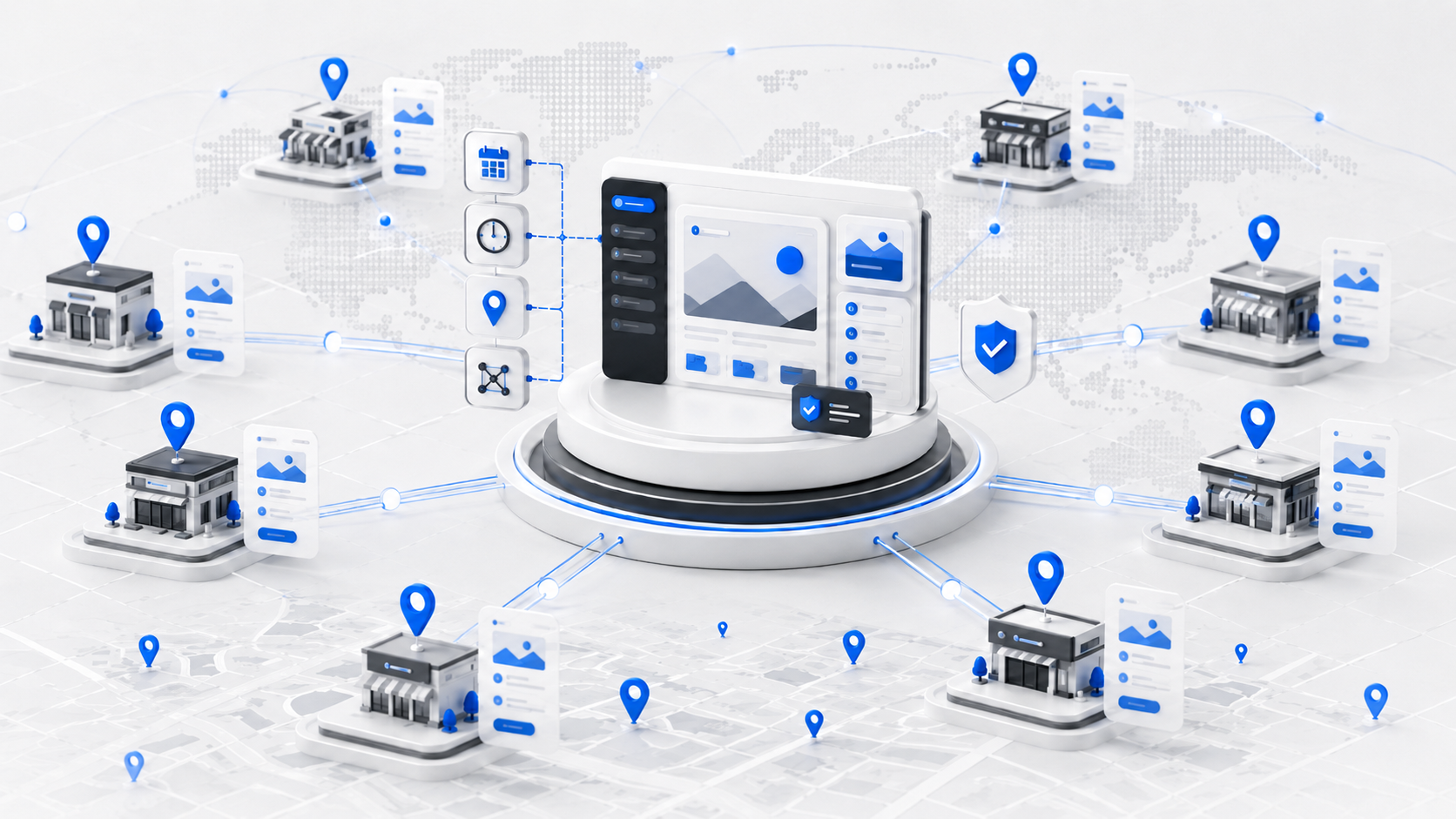
One practical example is multi-location retail. A store may need to sell from a central warehouse, reserve stock for stores, and support pickup or regional fulfillment. That’s not a plugin checkbox. It’s a business rule model that the website has to enforce.
For brands using marketplace fulfillment, logistics complexity can expand quickly. Teams dealing with FBA workflows often need to align ecommerce operations with processes like inbound shipping to Amazon FBA, especially when inventory availability and fulfillment expectations must stay synchronized across channels.
What doesn’t work is batch syncing everything on a schedule and hoping it’s “close enough.” That can work for simple catalogs with low order volume. It fails when products move quickly, stock is shared across channels, or overselling creates support and refund overhead.
9. Security, SSL and Data Protection Compliance
A store can look healthy right up to the day a compromised plugin skims card data, an exposed admin account publishes spam pages, or a privacy complaint forces legal review during a campaign. Security work sits in that risk window. It protects revenue, brand trust, and the team’s ability to keep selling.
This pillar covers three connected layers. First, transport and platform security: SSL, hosting hardening, patching, backups, logging, and access control. Second, data protection: what personal data the store collects, where it moves, how long it is kept, and who can access it. Third, compliance operations: policies, consent behavior, and regional restrictions that have to match what the site does in production.
SSL is the easy part. A valid certificate and full-site HTTPS are table stakes. The harder part is keeping the rest of the stack aligned with that standard. Admin accounts need least-privilege access. Theme, plugin, and app changes need review and ownership. Backup jobs need restore tests, not just green checkmarks in a dashboard. Cookie banners, privacy policies, and marketing scripts need to reflect real data flows, not assumptions from launch week.
Compliance matters here because it directly affects conversion and operational risk. Clear terms, refund rules, privacy disclosures, and accessible interaction patterns reduce disputes and help teams sell into stricter markets without scrambling later. As noted earlier, common checklist items such as focus states, readable contrast, touch target sizing, and required legal pages should be treated as system requirements, not cleanup work.
A practical review usually includes:
- Certificate and transport checks: Force HTTPS, remove mixed content, and confirm redirects, HSTS settings, and secure cookie behavior.
- Access control: Use role-based permissions, MFA where possible, and unique accounts for staff, agencies, and support vendors.
- Change management: Review plugins, scripts, and integrations before release. Remove anything unowned or unused.
- Backup and recovery: Test restoration for files, database, and order records on a schedule.
- Data handling review: Map form submissions, checkout fields, analytics tools, email platforms, and retention rules.
- Policy alignment: Make sure consent banners, privacy language, and actual tracking behavior match.
For WordPress stores, this WordPress security maintenance approach is a useful reference because it treats security as ongoing operational work instead of a one-time setup task.
One area teams miss is fulfillment-related compliance. Some products cannot ship to certain regions, and some shipping methods create documentation or carrier-rule requirements that the storefront needs to enforce before checkout. For that operational layer, Ship Restrict’s compliance checklist is a relevant reference.
10. Scalability, Caching Strategy and Infrastructure
The critical infrastructure test starts at 9:03 a.m. on launch day. Paid traffic lands, product pages spike, search requests climb, and the store has to keep serving pages while carts and checkout stay stable. That is why scalability belongs in this checklist pillar. It protects revenue during the few hours that matter most.
Teams often reduce scale to a hosting upgrade. The harder question is architectural. Which requests can be served from cache, which ones must hit the app, what happens to the database during bursts, and which third-party calls can delay or break checkout. A store that feels fast at normal traffic can still fail under campaign load if every page view triggers dynamic work.
Benchmark infrastructure against business outcomes
Triple Whale reports a global average ecommerce conversion rate of about 1.9 to 2.0%, with Shopify stores typically at 2.5 to 3.0%, top 20% at 3.2%+, and top 10% at 4.7%+. Those figures do not measure infrastructure directly, but they help frame the cost of weak performance. If mobile paid traffic adds products to cart at a healthy rate but drops sharply at checkout-start, the issue may be page speed, session handling, or an overloaded dependency rather than merchandising.
That is why this pillar should be reviewed with the same discipline as payments or SEO. The goal is not more servers. The goal is predictable conversion under peak conditions.
Build the stack for peak load
A scalable ecommerce setup usually includes:
- Full-page caching for anonymous traffic: Category, collection, and product browsing should be served without rebuilding the page on every request.
- Object caching for dynamic operations: Session reads, repeated queries, pricing rules, and menu or filter data often benefit from Redis or a similar cache layer.
- CDN distribution: Images, scripts, styles, and cacheable HTML responses should be delivered close to the user to reduce origin load.
- Readiness monitoring: Track uptime, error rates, cache hit ratio, slow queries, queue backlogs, and the health of search, payment, and inventory dependencies.
The trade-off is freshness versus stability. Aggressive caching reduces load and improves speed, but it can expose stale inventory, prices, or promotional content if cache rules are sloppy. Conservative caching keeps data fresh, but it forces more requests through the application and database. Good infrastructure work defines which pages can be stale for a short window and which actions must always be real time.
Resilience testing matters just as much. Promo code validation, gift card checks, tax calculations, shipping rates, search indexing, and order confirmation emails are common failure points. As noted earlier, the critical-path view is the right one here. The site has to keep selling even when one dependency slows down or fails.
If the store depends on a long chain of plugins, synchronous API calls, and uncached queries, peak traffic will expose it fast. Treat this pillar as part of the operating model for the business, not a hosting line item.
10-Point E-commerce Website Checklist Comparison
| Item | 🔄 Implementation Complexity | 💡 Resource Requirements | ⚡ Efficiency / Performance Impact | 📊 Expected Outcomes | ⭐ Key Advantages |
|---|---|---|---|---|---|
| Core Web Vitals Optimization & Page Speed Performance | High, requires front-end, server, and monitoring changes | CDN, better hosting, RUM tools, engineering time | ⚡ Major speed gains when implemented (LCP <2.5s, INP <100ms) | 📊 Better SEO, reduced bounce, measurable conversion uplift | ⭐ Improves rankings and user experience |
| Secure Payment Gateway Integration & PCI DSS Compliance | High, complex integrations and compliance processes | Payment gateway fees, security audits, developer expertise | ⚡ Medium, transaction speed depends on gateway but secure flows add steps | 📊 Higher conversion from trusted payments; lower fraud & chargebacks | ⭐ Enables secure multi‑payment options and regulatory compliance |
| Mobile-Responsive Design & Mobile-First Development | Medium, design-first approach with extensive device testing | Design resources, QA on devices, front-end dev time | ⚡ High perceived performance on mobile when optimized | 📊 Increased mobile conversions and better mobile SEO | ⭐ Ensures broad device reach and improved mobile UX |
| Search Engine Optimization (SEO) Foundation & Technical SEO | Medium, ongoing technical and content work | SEO tools, dev time for structured data and audits | ⚡ Indirect, faster sites help, but SEO is not immediate speed boost | 📊 Long-term organic traffic growth; richer SERP results | ⭐ Builds crawlability and long-term acquisition channel |
| Product Information Architecture & Content Management | Medium–High, taxonomy, CMS customization, data modeling | CMS enhancements, editorial workflow, data maintenance | ⚡ Indirect, better UX speeds findability and checkout flow | 📊 Improves discoverability, reduces support, increases AOV | ⭐ Scales catalog management and empowers non‑technical teams |
| Secure & Optimized Checkout Flow | Medium, UX design, payment integration, A/B testing | Dev resources, payment providers, testing platforms | ⚡ High, fewer steps and validations speed purchase completion | 📊 Lower cart abandonment, higher conversion rates | ⭐ Minimizes friction and boosts completed transactions |
| Analytics, Tracking & Conversion Measurement | Medium, tagging, events, and data pipelines | GA4, tag manager, heatmap tools, data warehouse | ⚡ Indirect, speeds insight generation for optimizations | 📊 Clear attribution, conversion visibility, data‑driven decisions | ⭐ Enables validated improvements and ROI measurement |
| Inventory Management & ERP/Backend System Integration | High, complex APIs and real‑time sync logic | ERP/ERP connectors, webhooks, integration engineering | ⚡ Medium, real‑time sync improves operational efficiency | 📊 Prevents oversells, improves fulfillment accuracy | ⭐ Unifies online/offline inventory and automates reorders |
| Security, SSL/TLS, and Data Protection Compliance | Medium–High, continuous security and compliance effort | WAF, DDoS protection, audits, monitoring, skilled staff | ⚡ Indirect, secure systems maintain uptime and trust | 📊 Reduces breach risk and legal exposure; preserves reputation | ⭐ Protects customer data and meets regulatory requirements |
| Scalability, Caching Strategy & Infrastructure | High, architecture, caching, and autoscaling expertise needed | CDNs, Redis/Memcached, load balancers, scalable hosting | ⚡ Very High, enables handling traffic spikes with low latency | 📊 Maintains performance during peaks, reduces downtime risk | ⭐ Ensures reliable performance and cost-effective scaling |
Your Blueprint for High-Performance Ecommerce
A useful ecommerce website checklist doesn’t stop at launch tasks. It gives the team a way to think about the store as a connected business system. That’s the key difference between stores that keep improving and stores that stay in constant repair mode.
These 10 pillars work together. Page speed supports SEO and paid performance. Product architecture supports discovery and merchandising. Checkout quality depends on payment logic, mobile design, and infrastructure resilience. Analytics tells you where the system is leaking. Security and compliance protect the operation while the business grows. Ignore one pillar long enough, and another team ends up paying for it.
This is also where project management usually gets harder than the build itself. Most ecommerce delays aren’t caused by code alone. They come from unclear ownership. Nobody decided who owns catalog taxonomy. No one documented payment failure states. Tracking plans were left until the end. Legal pages were treated as content cleanup. ERP logic was discussed in broad terms but never turned into actual sync rules.
The fix is simple, but not easy. Make each pillar a workstream with an owner, acceptance criteria, and test conditions. Don’t approve templates without content rules. Don’t approve checkout without failure-path testing. Don’t approve integrations without observability. Don’t approve launch without analytics validation in production-like conditions.
The stronger approach is to treat every major store function as both a customer experience layer and an operational layer. Search isn’t just a search box. It’s data quality, attribute modeling, relevance logic, and fallback behavior. Checkout isn’t just a design flow. It’s payment orchestration, validation, session integrity, and confirmation delivery. Compliance isn’t just policy copy. It’s actual behavior across forms, tracking, cookies, accessibility, and region-specific requirements.
That framing also helps with trade-offs. Not every store needs a headless build, advanced personalization, or a large integration stack on day one. But every store does need clarity about what’s core now, what can wait, and what creates hidden debt if skipped. A simpler architecture that the team can operate well usually beats a more impressive stack that no one can maintain.
For growing retailers, especially on WordPress and WooCommerce, this checklist is a solid way to scope the next phase of work. Use it to audit what you’ve already launched. Use it before a replatform. Use it before traffic campaigns. It will surface weak points faster than another round of visual revisions.
If you need implementation support, IMADO is one option for teams that need senior WordPress and WooCommerce engineering across performance, SEO-ready architecture, checkout, integrations, accessibility, and maintenance. The important part isn’t the vendor name. It’s working with people who understand that an ecommerce site is an operating system for the business, not just a storefront with products on it.
If you’re planning a new store, auditing an existing one, or need senior engineering support for WooCommerce performance, integrations, accessibility, and launch readiness, IMADO is a practical partner to evaluate.
Let’s build something exceptional
Tell us about your project – we’ll help you launch a fast, scalable, SEO-optimized WordPress platform built for growth.